One of the the questions every photographer gets asked most frequently is what camera and lenses do they use. Well, today I’m going to allow you to take a look into my camera bag and see what tools I use to create my images.
Let me start by saying that I really love my Nikon camera and lenses (by no means is this any endorsement). They are the amazing tools that help me capture the images of the things I see. As I have stated before -> It’s not the camera, lenses and gear that make a great image – the person using it does. There are many more factors that you need to pair with that great gear to create a fabulous photograph… knowing how to compose your image and create unique art, how to capture true emotions, how to achieve proper exposure, how to nail your focus, how to process your images well, etc., etc. But having the right tools to do your job as a photographer will definitely improve your final results and in some instances give you more creative freedom to get the shots you are dreaming of. We all just have to find that balance between “the camera doesn’t matter at all – an artist can create beauty from absolutely any gear” and “you must have the latest and greatest expensive gear to take good photographs.”
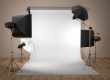
For a quick background, I’m a primarily an event & lifestyles photographer based here in Tokyo, Japan. It means that I do most of my work on location. It’s a very demanding work, but I really enjoy it. This also means that I’m lighting more often than not. Because I don’t have a studio, I typically shoot where it’s possible… and summers in Japan usually very hot, so most of my projects are indoors. Shooting indoors, I tend to like to control the lighting and use my portable 400ws strobes. Yes, I still have my flashes, but I’m not using them twice a day anymore… more like once a month.
This piece isn’t more about my lighting gear than my cameras, so let’s just get this out of the way. I use a Think Tank Photo Airport Security roller. I use two Nikon D3S and have D700 for my bodies. I have the standard 14-24mm 2.8, 24-70mm 2.8 and 70-200mm 2.8 zooms, and also have a 50mm 1.8 and an 85mm 1.8 (mainly for portraits). I have a SB-800 and two SB-900 flashes.
About a year ago, I was getting tired of charging a ton of AA batteries the night before a shoot, and decided to take the studio strobe plunge. I’d been reading for a long time on how to make speedlights act like bigger strobes, and I’d tried doing things here and there with my small strobes, but I always reverted to using my studio strobes with 80cm Softbox. I knew that if I wanted to be serious about learning about lighting, I was going to have to go cold turkey on the speedlights.
MY CAMERAS:
NIKON D3S (qty: 2)
I recently upgraded my main camera from the D200 to the D3S and just love it. I’m finding the high ISO performance (amazing low light capabilities with minimal noise), and my general experience has been more accurate metering and smoother color and tonal gradations. The low light handling with so little noise is really important to me because I never shoot with a flash and love natural light … however, I live in Oregon and it’s dark, rainy and gray here 6-months of the year. Being able to crank up my ISO without worrying about noise is wonderful. The video function on the D3S is lacking for those wanting serious video, but is fun for taking quickie videos “just for fun” for behind the scenes stuff. It also has the benefits of a much longer battery life (I rarely even think about the battery even though I always carry charged back ups with me as well as have my charger in the media center) and two storage card slots. I shoot a lot of fashion shows as well as a ton of motor sports and extreme sports, I love the faster continuous shooting when working with speedy little ones. Being able to shoot 9fps versus 5fps can mean the difference between getting the perfect shot and getting one with eyes closed or a finger up the nose.
NIKON D700 w/Battery Grip (qty: 1)
This is my back-up camera and I have nothing but fabulous things to say about this camera body. It also has the benefit of being much less expensive than the D3S (and lighter, however, I always used the battery grip with mine so the size difference was minimal when I swap cameras). A fabulous camera for portrait photography and handles high ISO and low light situations beautifully.
The 12.1 megapixel full frame Nikon D700 was released in way back in July 2008. That’s a very long time in the world of technology. When it was released, it was hailed as the first ‘compact’ full frame camera, essentially a Nikon D3, (Nikon’s top of the line DSLR at the time), shrunk down and squeezed into a body the size of the enthusiast level Nikon body (D300).
Note: I still have both of my D200s as emergency back-up cameras should my D3s or D700 go down for any reason (ie: service or maintenance).
MY LENSES:
14-24mm f2.8G ED
Events & General Use
24-70mm f2.8G ED
Portraits & Low Light
70-200mm f2.8G ED
Motorsports & Fashion Shows
58mm f1.4G
Portraits & Low Light
85mm f1.4G
Portraits & Low Light
200-400mm f4G ED
Motorsports & Fashion Shows
500mm f4E FL ED
Motorsports


MY FLASHES:
NIKON SB-800 (qty: 1)
These are my event flash that gets side mounted for the ‘off camera’ effect often used with a self-made softbox for more gentle lighting.
Nikon’s SB-800 is not the current top-flash anymore – it has long been replaced by the SB-900 and SB-910. But for many professional photographers this flash is still one of the best hot shoe strobes out there today.
The newer models offer a wider zoom range, a much improved user interface e.g. with direct keys for wireless mode and DX/FX format detection, and a number of other improvements.
However, they are much larger compared to the compact-size SB-800, and the SB-800 has more power under the hood: at 35mm you get a guide number of 38 (meters) from the SB-800 while the successor’s GN is only at 34.
Combined with solid construction, a PC sync port for trigger cables and external power pack socket, support of the latest Nikon flash protocol (i-TTL / i-TTL BL) plus manual mode and “auto” mode the SB-800 is a truly professional tool.
NIKON SB-900 (qty: 2)
The SB-900 flash is an evolution of the SB-800 model but still runs on four AA batteries and forms the heart of Nikon’s Creative Lighting System. Larger and radically different in design from the SB-800, the new model offers a GN of 48 (ISO 200/metres).
MY HIGH POWER STROBES:
VISICO 5 TTL (qty: 2)
This is my studio light, used for model photography and also product photography and are extremely versatile and very portable for location shoots.
The VISICO 5 is a Lithium-ion powered, 400Ws strobe, with 2.4GHz TTL and HSS enabled radio receiver built inside for Nikon(or Cannon) DSLR camera systems.
The compact fan cooled strobe weighs just 1.85kg, and provides a Bowens S-type accessory mount, as well as a powerful 20 watt LED modelling light with 6 step adjustment.
The VISICO 5 TTL also feature an LCD display interface, and provide 3 individual groups A / B / C, and 4 Channels.
VISICO VC-818TX
Triggering and remote control are via a low profile VC-818TX transmitter unit, with back-lit LCD display interface. Available in Canon and Nikon versions, a compatible receiver unit is also compatible with respective Canon or Nikon TTL and HSS enabled speedlites.
This means the one transmitter unit can fire and control the VISICO 5 TTL strobes, and respective Canon or Nikon speedlites at the same time, all with full TTL, Remote Manual, and HSS etc.
The VC-818TX transmitter is also compatible with all of Visico’s range of radio enabled studio strobes.
The 2.4GHz transmitter provides an AF assist light, around 100 meter radio range, a 3.5mm sync port, and USB port for firmware updates.
The VC-818TX transmitter unit provides control of 3 groups A / B / C, and 4 channels in TTL, Manual or Multi Modes. TTL and Remote Manual groups can be mixed together, and turned off individually as required.
MY TRIPODS, MONOPODS & HEADS:
MANFROTTO 190CXPRO4 (qty: 2)
The 190CXPRO4 carbon fiber 4-section tripod is one of Manfrotto’s top-of-the-line four-section tripods. The leg tubes are made of carbon fiber for an optimal balance between sturdiness and weight. At a mere 3.6 lb (1.6 kg) makes this tripod an excellent option for travel photography with a folded length of 20.6″ (52.5 cm). Manfrotto managed to cut down the length by 16 cm compared to earlier 190 models thanks to this four section design. Not bad for a tripod that extends to a maximum length of 63″ (160 cm) with a load capacity of 15.4 lb (6kg).
One of the more interesting characteristics of the 190CXPRO4 is its 90° center column mechanism. This mechanism lets you extend the column vertically as normal, or horizontally for a wide range of framing and shooting possibilities from portrait mode to otherwise uncomfortable angles for macro photography. Switching between the vertical and horizontal column orientation requires a press on the mechanism on the bottom of the centre column, and can even be done with a camera attached.
These tripods are very versatile and can do pretty much everything imaginable and very sturdy when loaded down. They are lightweight carbon fiber construction, which is great when you have to haul around a bunch of gear already. One of these tripods has the Manfrotto 498 Ball Head (doubles as a light stand when needed), the second tripod has the Manfrotto 3-way pan and tilt head which is used for my main camera support.
MANFROTTO 694CX (qty: 1)
A good monopod is a handy accessory for photographers who shoot at fashion shows or racing events when shooting telephoto distances for long hours and want to be more mobile than a tripod allows. Using a monopod helps you to keep your camera steady, so you can get a sharp shot at a longer shutter speed. It’s also helpful when shooting with heavy lenses, as you won’t have to support your camera and lens all day with your arms. The Manfrotto 694CX Carbon Fiber 3-Section Monopod is one of the better ones that I’ve used, but it’s also a little on the pricey side. Its carbon fiber construction keeps its weight down, but it’s still sturdy enough to support up to 11 pounds.
The 694CX weighs about 1.3 pounds and collapses to 21.3 inches. There are three sections, each of which requires you to open a clip in order to adjust; closing the clip locks that section into place. When fully extended it reaches 65 inches in height; at 5’9″, I was able to shoot comfortably at less than full extension when I added the 486 Ball Head and my Nikor 80-200mm F2.8 , but if you’re significantly taller you’ll be more comfortable with a monopod with a bit more extension. You can screw the monopod directly into the tripod socket on the base of your camera or lens, but a head with a quick release plate is a handy add-on.
There’s a hand strap attached to the top, and the bottom foot is rounded rubber. There’s no way to change that out to a spike or add a support base, which may be limiting when shooting on uneven terrain. It is rated to support up to 11 pounds, although the 486 Ball Head is only rated for 5.5 pounds. I used the monopod and head combination with a 7.5-pound lens and a 1.7-pound camera. There were a couple instances where the head’s tilting method lurched forward under the weight, but it wasn’t a frequent occurrence.
The Manfrotto 694CX Carbon Fiber 3-Section Monopod is expensive, but this is my fashion show workhorse and a very good investment for sports shooters, nature photographers, and others who use telephoto lenses. I am able to get sharp shots with a heavy telezoom at 300mm at speeds as low as 1/10-second; even with optical stabilization. That’s a feat. And I have managed to shoot all day without killing my arms, which would not be the case if I was hand-holding 9-plus pounds of camera and lens for hours on end. Works great when moving around the tight areas in the press pits.
MY CAMERA BAGS:
Rolling Cases
Airport Security v2.0
Think Tank Photo
1560 w/Custom Foam
Pelican Case
1510 w/Custom Foam
Pelican Case
Back Packs & Shoulder Bags
Streetwalker HardDrive
Think Tank Photo
Shape Shifter v1.0
Think Tank Photo
Urban Disguise 50 & 60
Think Tank Photo
Reviews on all the camera bags that I personally use when I am shooting on location for events and photo shoots will be added here for in depth understanding about their quality, design and use.
EXTRAS ETC:
Change Up v1.0
Think Tank Photo
Belt pack/chest pack with built in modular rails on built-in waist strap add capacity using Modular Components and harness straps. Can be worn three ways: belt pack, shoulder bag or chest pack -> I use the chest pack to carry things around with me while working track side at Suzuka Circuit.
Pixel Sunscreen v2.0
Think Tank Photo
Portable sun shade for my laptop that provides me with privacy and/or a shaded viewing area when on location working in bright conditions. It has an additional pullover head cover for extreme conditions and extra privacy; side and back openings for routing cords and cables; collapses for compact storage.
Credential Holder Tall v2.0
Think Tank Photo
This is great for the larger press credentials or trade show passes (4×6), and conveniently can hold my smart phone and other necessities like business cards, pens & memos.
Pixel Pocket Rocket (qty: 4)
Think Tank Photo
Convenient folding wallet for 10 CF memory cards, has built in business card holder makes for easy identification and compact fits easily in my pocket or attaches to my bags with included lanyard.
Disclosure: I am an event photographer and the brands featured on this website demonstrates the quality and craftsmanship of the companies whose products I use. This website contains affiliate links to some of these companies, which means I receive compensation if you make a purchase using the links provided. Shogunmaster Photography is independently owned and the opinions expressed here are my own.